Showing posts with label NARM-ART MUSEUM PASS. Show all posts

Thursday, May 21, 2026

Santa Barbara Museum of Art

The museum's initial collection was donated in the 1940s by Wright S. Ludington, a resident of Santa Barbara who inherited a large fortune from his father and dedicated his life to collecting art, entertaining, and philanthropy. The collection is broad in scope and includes Etruscan bronzes, Greek and Roman sculpture, Gothic carvings, and 20th-century paintings by Braque, Picasso and Matisse. 

The museum building and art collection have grown significantly since the 1940s and now houses a wide variety of art spanning 5,000 years. The galleries feature changing, ongoing, and traveling exhibits. 

A ramp accesses the museum entrance. The second floor is accessed by an elevator. A short set of steps goes to a few of the galleries. A small lift is located behind the wall on the right side of the steps.

RVs cannot be parked on the streets in Santa Barbara so we parked in the designated RV spaces in the Garden Street lot and walked/rolled to the museum on State Street. State Street is an entertainment and retail district with 10 blocks closed to traffic. All of the curb cuts are very good and the business have accessible entrances.  Museum  34.42361, -119.70409


Friday, December 19, 2025

Birmingham Civil Rights Institute

 Birmingham Baptist minister, Fred Shuttlesworth, founded the Alabama Christian Movement for Human Rights after the NAACP was banned in Alabama. His decades of involvement in civil rights activities resulted in beatings, jail time, and bombs planted under his house and church. His tactics were more radical than those used by Martin Luther King and other leaders but they brought attention to the atrocities occurring in southern cities as the images of children being attacked by police dogs and rolled down the streets by high pressure water were broadcasted into suburban living rooms. This helped lead to the Civil Rights Act of 1964. 

The museum tells these stories with life-size dioramas. The Birmingham jail cell where Martin Luther King wrote his famous "Letter from a Birmingham Jail" and part of a armored police car that Bull Connor used to intimidate protesters are included in the exhibits. Common examples of racism that were considered acceptable and important events in the civil rights movement are highlighted. The human rights movement in countries around the world fills one of the galleries. 

The 16th Street Baptist Church, where four young girls were killed on September 15, 1963 by a bomb planted by members of the KKK under the church steps, is located across 6th Avenue. Kelly Ingram Park, across 16th Street, has paved paths and sculptures. 

 
The museum and park are accessible. We did not visit the church.

We parked in an accessible space in the lot located at the rear of the museum. The lot is wide so we could pull straight in without blocking anything. Large RVs can be parked across the spaces or on the street. Institute  33.51585, -86.81546


Wednesday, June 11, 2025

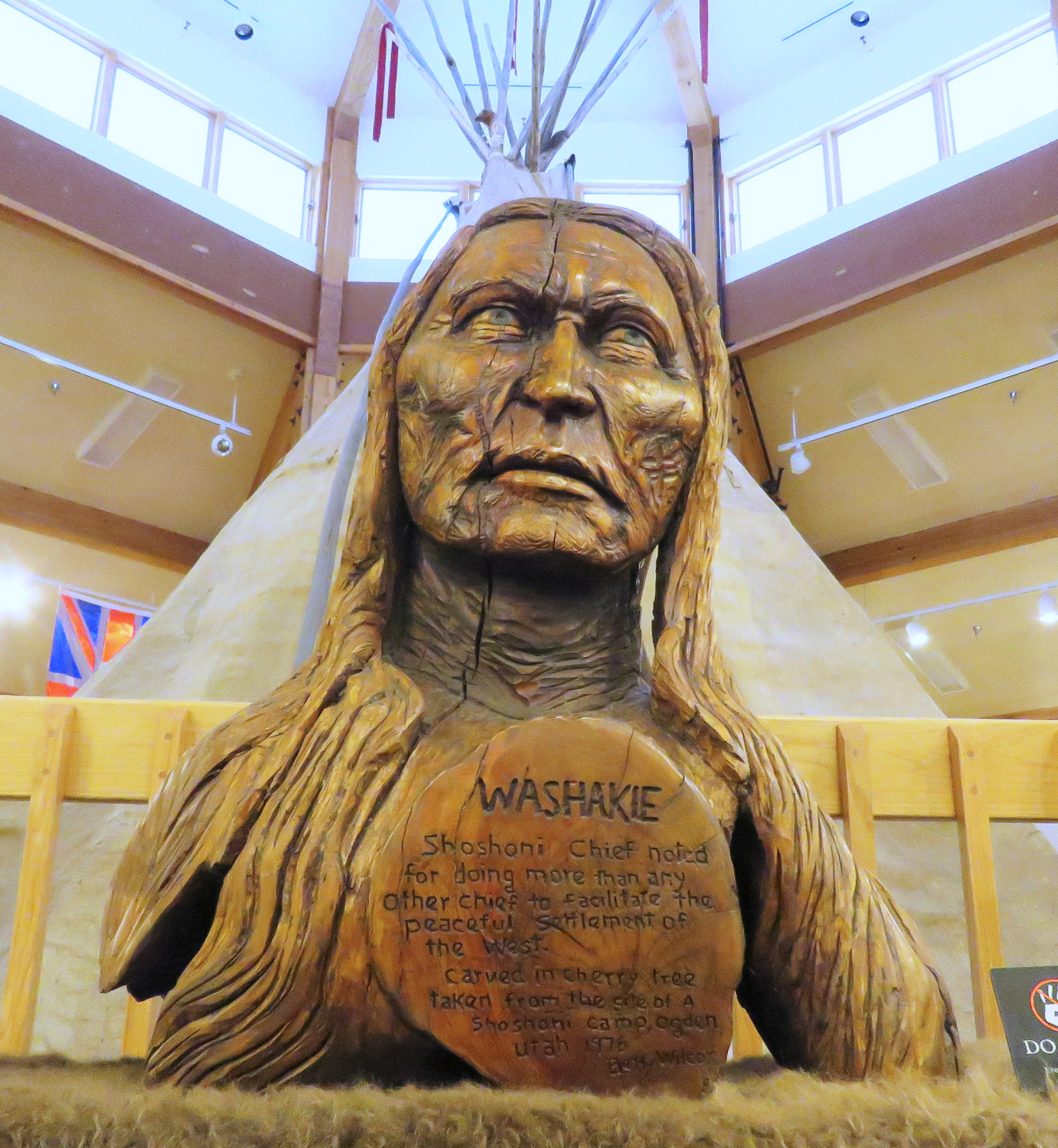
Museum of the Mountain Man

The mountain men of Wyoming were after one thing - beaver pelts.The method of removing the fine underfur from a beaver pelt and making it into a dense felt that could be molded into hats was perfected hundreds of years ago. Beaver hats became so popular in Europe that the beavers became almost extinct and by 1670  French, Dutch, and English had established fur trading companies in America to trap the abundant number of beavers found all across the continent. 
As the beavers were depleted in the coastal and mid-west regions, the trappers moved into the isolated valleys along the mountain ranges of the west and thus began the legend of the rough, bearded, solitary man finding his way in the wilderness. In reality most were young, clean shaven (native women did not like bearded men ;D), part of group hired by a trading company, and often traveling with women and children. 
 The rendezvous were the real thing though. For sixteen summers, from 1824 to 1840, thousands of Native Americans, trappers, and fur company traders set up camp in a valley meadow to barter, buy, sell, drink, gamble, and trade stories. Six were held about 10 miles west of the museum. The rendezvous were necessary because it would not have been practical for the trappers, on their own, to transport their furs all the way to the trading company headquarters. Instead the trading companies organized supply trains of pack animals, two wheeled carts, and wagons loaded with new traps, guns, knives, hatchets, beads, blankets, alcohol, tobacco, tin cups, tools, cooking pots and anything else that the Native Americans and traders might find attractive and then carted the pelts back to headquarters in St Louis. The journey covered 1,500 miles one way and opened the route to later travelers. By 1840 silk hats were the top fashion, the beaver trade declined, and rendezvous were no more. 
The museum is very nicely done with many stories of individual mountain men plus artifacts and sculptures. The lower level features paintings of mountain men. 

The museum is accessible with an elevator to the lower level. 

The parking lot is large enough for any vehicle. RVs will fit in the accessible spaces which avoids a roll across the gravel lot. Museum 42.86882, -109.85191


Thursday, April 17, 2025

Neon Museum at Night

We've visited the Neon Museum twice, once about six months after it opened and six years after that but we've never visited at night to see the signs lit up. Even though there's a higher fee for the evening hours we still got free admission with our NARM pass. Guided tours can be added on for an additional charge. The cell phone tours have been discontinued but there are signs with information and QR codes plus employees stationed throughout who are happy to answer any questions. 

 
The museum restores the neon to more signs every years so there are always new signs to admire. Colored lights illuminate the signs that haven't been restored. We went at dusk so that the brightness of the neon wouldn't wash out the photos. Cameras are not permitted but cell phones and tablets are okay. 

The ground is hard packed and rolling is easy but it's a little wavy so you may find yourself going in a direction that you didn't plan on. :D

Large vehicles can be parked next door at the Cashman Center.  Museum  36.17781, -115.13481 

Thursday, April 10, 2025

Scottsdale's Museum of the West

 The museum galleries feature permanent and changing exhibits of pottery, sculptures, paintings, and a large collection of western artifacts donated by Abe Hays, a local collector and art dealer. Included is a fun painting that starts on the wall and continues onto the floor. Visitors become part of the painting when a photo is taken from a designated spot. I didn't get it quite right so Tony looks a little squat. :D

 
The museum is accessible. 

There are a few parking spaces in the alley at the north side of the museum. Short vans will fit but watch for low branches. We parked in the large lot on 2nd Street across from the Stagebrush Theater. There's also on-street parking. Museum  33.49212, -111.92836