Sunday, March 11, 2018

Fork of the Roads Monument

  IMG_0591

   By the 1830s poor farming practices had ruined the land on tobacco plantations in the Chesapeake Bay area. At the same time cotton grown in the deep South was in high demand and more workers were needed. A federal law passed in 1807 prohibited importing slaves from Africa so many northern slave holders sold their slaves “down the river”. Manacled and chained together, they walked from Alexandria, Virginia to Natchez, Mississippi, a distance of about 1,000 miles, where they were sold at the Forks of the Road slave market owned by Isaac Franklin and John Armfield. The market changed hands in the 1840s but was still in the business of slave trading in 1863 when the Union Army occupied the town and shut it down. 

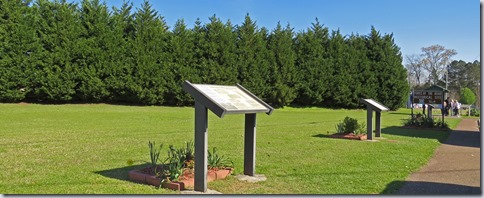
  A triangle of grass and a row of evergreen trees mark the location of the Fork in the Roads slave market. Interpretive signs on the edge of the triangle and in a kiosk give details of the ordeals the slaves endured on the trip to Natchez, at the slave market, and on the southern plantations.

  The site is accessible.

  The parking pull off is large enough for RVs.  Fork of the Roads  31.55584, -91.38415

mississippi1

William Johnson House

IMG_0570

  William Johnson was a rarity in antebellum Natchez – a free black man who had a business and owned property and slaves. Johnson’s mother was a slave as were her children William and Adelia. By 1820 they had all been freed by their owner, who was most likely the father of the children. Johnson started keeping a diary in 1835 and although much has been learned of his daily life, he wrote little about his feelings on owning slaves after having been a slave himself. Johnson was murdered in 1851 during a dispute over land boundaries.

   The house has exhibits on the first floor. The second floor, which was the family home of Johnson, his wife Ann Battle, and their 11 children, is furnished with pieces from the time period including some owned by the family.

  Both floors are accessible. The elevator was being replaced during our visit so we did not get to see the second floor exhibits.

  Parking is available on the street.  House   31.56013, -91.40573

mississippi1

Saturday, March 10, 2018

Natchez Bluff Park Walkway

IMG_0557

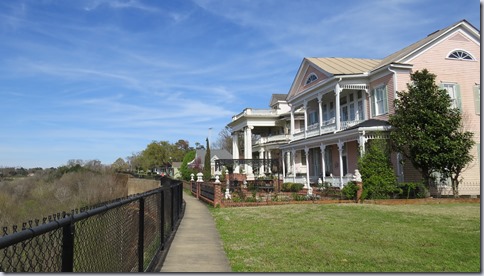
  The city of Natchez is located on a bluff 180’ above the Mississippi River so the walkway has great views of the river. The walkway is fairly short, a little less than 1/2 mile, but continuing along the sidewalk of Clifton Ave. will extend the walk to 1 1/2 miles round trip. Interpretive signs are located along the walkway and Clifton Ave. with information about the houses and their different styles of architecture.

         IMG_0555

IMG_0559

  The walkway is wide and smooth. There’s a short hill at the beginning of Clifton Ave. and no sidewalk so walking in the street is necessary until the street ends and become sidewalk.

IMG_0562

   The parking lot is large enough for any RV. Bluff Walk  31.56408, -91.40519

mississippi1

Friday, March 9, 2018

Grand Village of the Natchez

IMG_0552

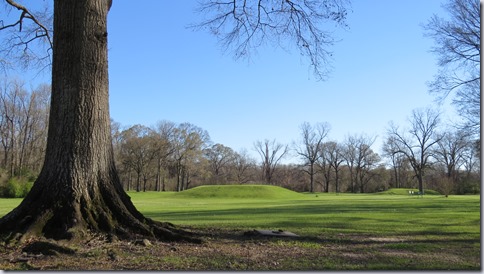
   The two grassy mounds at the Grand Village site were used by the royal family of the Natchez tribe. The home of the Great Sun, the hereditary chief, was located on the top of the smaller mound and a temple with a sacred fire stood on the larger mound. A third mound which is covered in vegetation was abandoned long before the first Europeans arrived in 1682. By 1716 the French had established a colony on Natchez land but relationships between the two groups deteriorated rapidly. The Natchez attacked the French fort in 1729 killing most of the soldiers. The French retaliation forced the Natchez from their villages and the ceremonial mound site. Many of them joined other tribes.

  The site includes a small museum with displays and artifacts. A short video is shown on request. Interpretative signs are located along a grassy trail that loops around the mounds.

IMG_0545

IMG_0546IMG_0543

   The museum is accessible but there’s a short ramp to the entry door which opens outward making it very difficult to enter without assistance. The grassy trail is not accessible.

  The parking lot is large enough for any RV.  Mound   31.52535, -91.38039

mississippi1

Thursday, March 8, 2018

Natchez National Historic Park–Melrose

IMG_0524

   John McMurran, a Pennsylvania native, moved to Natchez in the mid 1820, established a successful law practice, and married Mary Louisa Turner, the daughter of a prominent local family. By the mid 1800s he owned or had an interest in five plantations and 325 slaves. The family’s town home, on the outskirts of Natchez, was finished in 1849. It sits on a rise overlooking a expanse of grass and wildflowers and includes 80 acres of land, two large brick buildings where 25 slaves lived, a barn, carriage house, and a small building with exhibits about slavery and a room furnished to depict a typical home of an enslaved family.

IMG_0541

          IMG_0526

IMG_0527

IMG_0529

  The family fortune was lost in the Civil War and the house was sold in 1865 to Elizabeth and George Davis. It was uninhabited until 1900 when Davis’s grandson and his wife moved in. The Davis family sold the house in 1976 to Callon Petroleum Company who subsequently sold it the park service in 1990. The original McMurran family furnishings remained in the house through all of the sales. The house has never been updated or remodeled but has been kept in excellent condition.  Guided tours are given on the hour. Admission to the property is free but a fee is charged for the tours. American the Beautiful passes are not accepted however US residents 62 and over receive a 50% discount.

IMG_0532

IMG_0531

  The accessible parking spot is paved. Paved trails link the main buildings. A ramp accesses the first floor of the mansion. The exhibit building has a ramp. The barn and carriage house do not have paved walkways or easy access.

  The parking lot is large enough for any RV. The entrance gate is narrow so use caution. Melrose  31.54403, -91.38237

mississippi1

Tuesday, March 6, 2018

B.B. King Museum & Delta Interpretive Center

IMG_0491
  Riley B. King, the son of sharecroppers, was born on a Mississippi Delta plantation in 1925.  A $15.00 guitar that he bought at 12 years old became his ticket out of poverty and the never ending labor in the cotton fields. By age 18 he was working part time playing guitar with a local group and five years later he landed a job at WDIA in Memphis as a singer and disc jockey. This is where he picked up the nickname "Beale Street Blues Boy" which was shortened to B.B.. Record deals followed and soon he was booked in concert halls all across the country, playing for mostly black audiences. The color barrier was broken in 1967 when he performed at the Fillmore Auditorium in San Francisco to standing ovations from the young, long haired, and predominately white audience. King's career spanned 60 years and his style influenced many musicians from Jimi Hendrix to Fleetwood Mac.

  The museum is very good with exhibits portraying B.B.’s early life and the conditions of the Mississippi Delta at the time; his musical career; and his generous and engaging personality.  Several listening stations allow visitors to explore the music of King and other blues artists.
IMG_0488
IMG_0495
 IMG_0492IMG_0497
  The museum is accessible.

  RVs will fit in the lot or along the street. This is Harvest Hosts site so members may stay overnight in the lot.  Museum  33.44946, -90.64488
IMG_0502
mississippi1[5][3]

Monday, March 5, 2018

Wister Gardens

IMG_0477

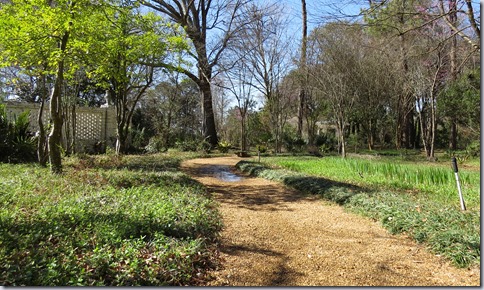
   In season azaleas, roses, and day lilies provide splashes of color in this garden. Very little was blooming during our visit. We still enjoyed wandering along the paths but were a little disappointed at the small size.

  Small but  pretty, the the garden is a popular place for holding weddings and other large gatherings. It features a fountain, gazebo, a small lake, large covered patio, and a glassed-in garden house.

IMG_0481

        IMG_0480

   Most of the paths are surfaced with small stones. Wheelchair users may need assistance.

  The parking lot is large enough for any RV. Use caution and watch for low branches when driving down the oak alley entrance. Garden  33.19583, -90.48426

mississippi1[5][3]

Sunday, March 4, 2018

Sam Olden Museum

IMG_0474

  Two flights of steps to the second floor museum were too big of an obstacle for us, although the sweet woman who is the building administrator told us that she is attempting to get funding for an elevator. Yazoo City is a small rural town with few industries, a declining population, and a low wage base so an elevator may be a long time coming.

   The rest of our day was equally unproductive. Two small museums in Belzoni, about 20 miles north of Yazoo City, were both closed. The boardwalk at Sky Lake WMA was underwater and closed.  Our last stop at Wister Gardens proved to be very short as the garden is small. Some days are just like this however we have no complaints - lots of sunshine, warm temperatures, and spending the day riding down country roads – wonderful!

 Museum  32.84974, -90.41141

mississippi1[5][3]

Thursday, March 1, 2018

Ridgeland Natchez Trace Trail

IMG_0472

  Ten miles of wide paved trail travels through the woods alongside the Natchez Trace Parkway. We parked at the Parkway Information Cabin at Ridgeland and walked/rolled three miles east to the end. Trees and shrubbery surround the trail so it a nice nature walk but since it’s sandwiched between the parkway and local roads there’s always traffic noise.

IMG_0469-1IMG_0455-1IMG_0466-1

   The trail is accessible with gently rolling terrain.

   The parking lot has long spaces. Trail  32.42567, -90.12592

mississippi1[5]

Tuesday, February 27, 2018

Mississippi Museum of Civil Rights

IMG_0450

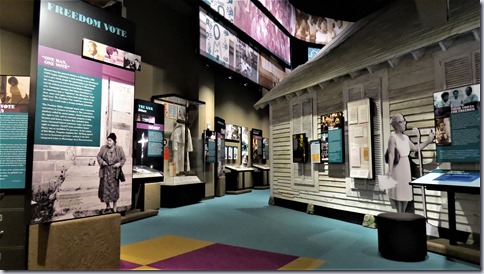
  In 1964 Mississippi was ground zero in the civil rights movement due to the Freedom Summer Project. At the time more than a third of Mississippians were black but only only 6.7% of eligible black voters were registered. The Freedom Summer Project recruited northern college students (mostly white) to work with black residents to organize voting drives, to establish a new political party that would represent the black population, and to form Freedom Schools to teach history and politics. The students and local participants were met with violence and intimidation. The beatings, jail time, bombings, cross burnings, and the horrific  kidnapping and murder of three young men, James Chaney, Mickey Schwerner and Andrew Goodman shocked the world and led to the passage of The Civil Rights Act of 1964 and the Voting Rights Act of 1965.

IMG_0452 (2)IMG_0451

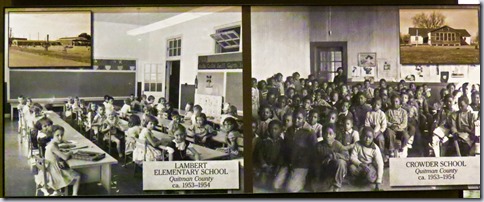
  This is a very good museum that covers all aspects of the civil rights movement. The exhibits start with a short history of slavery before moving onto the failure of reconstruction; the increasing restrictive Jim Crow laws; the enormous number of lynchings; the infiltration of the government and law enforcement by the Citizens Council and KKK; and the struggles to gain equal treatment and access to jobs, housing, recreation, schooling, transportation, and retail establishments.

IMG_0436-1

IMG_0437

  For an overview of Mississippi history visit the adjoining Museum of Mississippi History. We went to this museum first to have a better understanding of the early history of the state.

  The museum is accessible.

   RVs can be parked along North Street. The sidewalk of the museum block is in good condition. We had to park a block north in front of a church and the curb cuts in that section are in bad shape. Wheelchair users who do not have assistance will probably have to wheel down the street.  Museum   32.3013, -90.1789

mississippi1[5]