Thursday, September 22, 2022

Fly Creek Cider Mill & Orchard

The mill has a long history, starting in the mid-1860s when Hosea Williams pressed the first apples to make cider, some of which was fermented into hard cider. Williams also built a grist mill to grind corn and wheat, and a woodworking shop. The second owner, Linn Kane, continued making hard cider until the 1950s when competition from cheap beer forced him to close the mill. In 1962 Charlie and Barbara Michaels bought the mill property to convert it into their home and decided to renovate the mill too and start making cider again. Over the years they expanded to include a store and freshly prepared food. After 37 years of operation, the Michaels sold the mill to their son, Bill, and daughter-in-law, Brenda, who are the current owners.

The store is filled with all kinds of goodies - fresh apples, sweet and hard cider, fudge, aged cheddar cheese, canned goods, specialty foods, and gift items. The second floor has more gift items plus a chance to view the cider marking machinery and even watch the action if visiting in the fall. Exhibits explain the process. The restaurant is not full service. Order at the counter then take your food to one of the tables.

The grounds are accessible. The first floor of the store is accessible but the second floor where the cider tasting and the view of the cider making machinery are located is accessed by steps only. The deck overlooking the mill pond is accessible.
This is a Harvest Hosts location and the spot that is reserved for campers is great. The parking lot at the store is small so most people park in the large lot on the opposite side of Goose Street. The Harvest Hosts site is at the far south end of the large lot. It's a mowed grassy area with a picturesque red barn, picnic tables, and a wildflower meadow. We bought a container of lobster bisque and a hot pot roast sandwich meal which included a cup of sweet cider and a slice of apple pie. The sandwich and cider were delicious; the bisque was good but the pie was just okay. Mill  42.72307, -74.97828

Wednesday, September 21, 2022

Fenimore Art Museum

The art museum is located in a mansion built by Edward Severin Clark, an heir to the Singer Manufacturing Company fortune. After Clark's death in the 1930s his brother, Stephen Carlton Clark, inherited Edward's estate and gave the mansion to New York state for the art museum. Clark was an avid collector and donated much of the artwork in the fine art and folk art collections. The museum is named in honor of James Fenimore Cooper, author of the popular Leatherstocking Tales, and the original owner of the land.
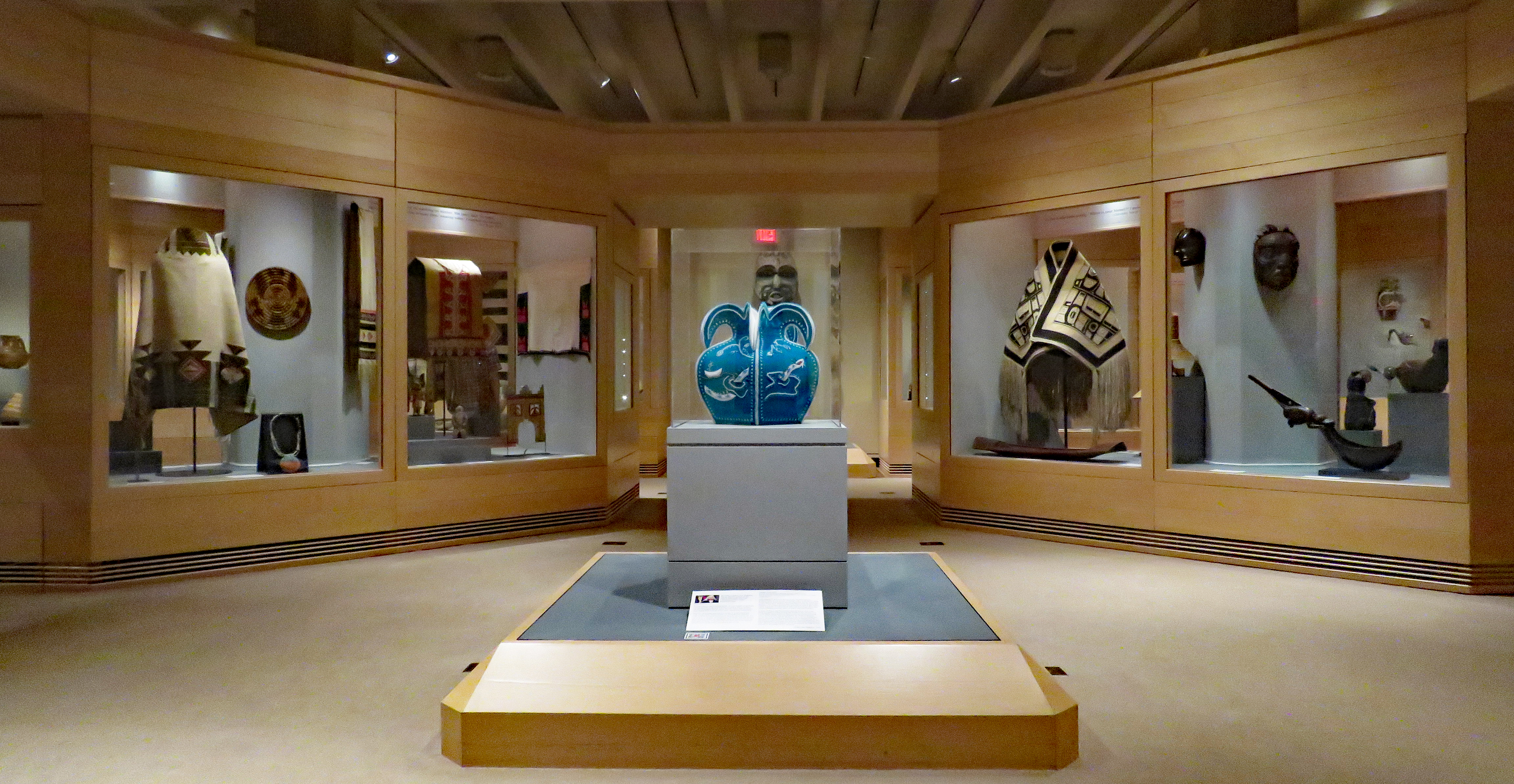
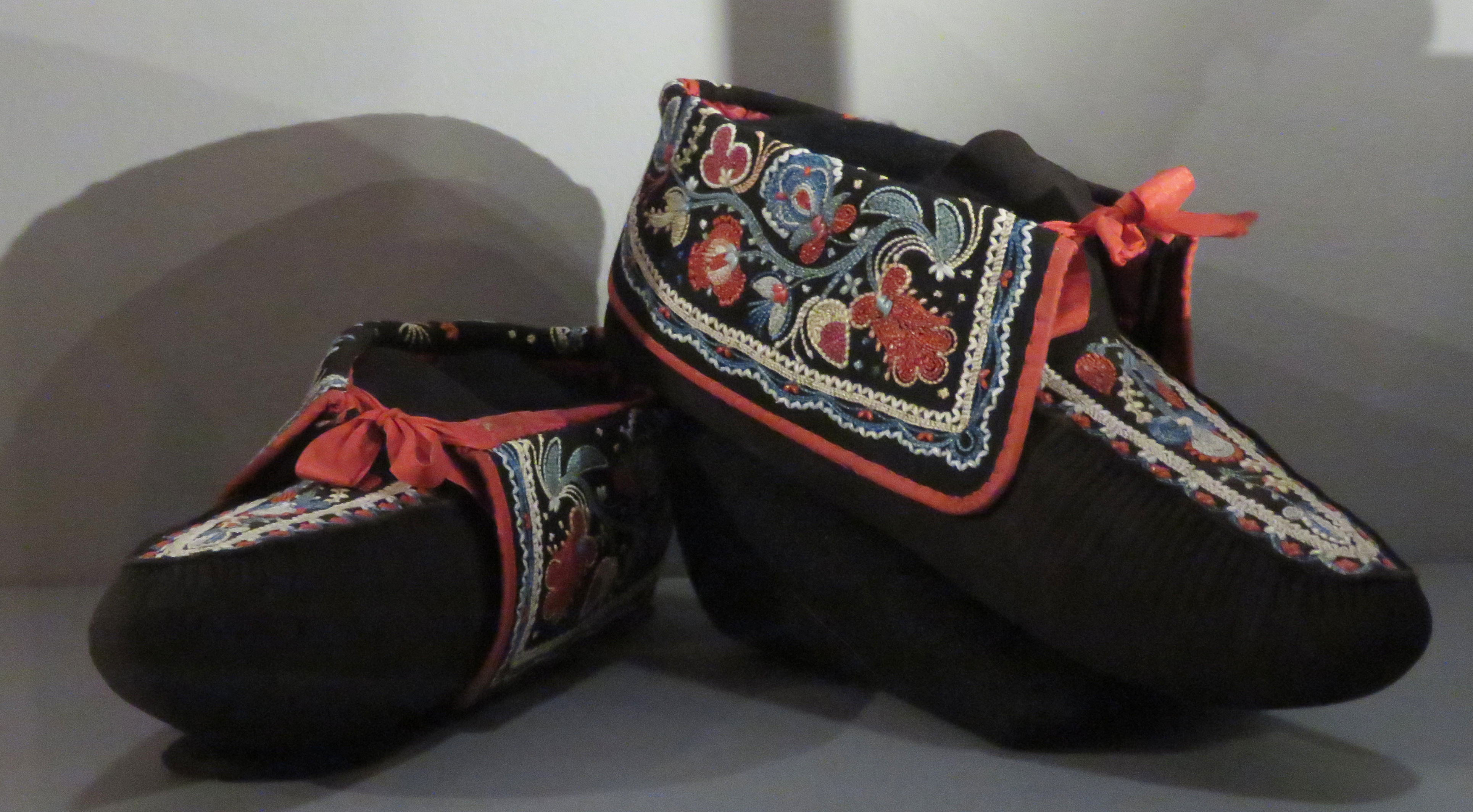
The museum's collection includes fine art, folk art, and Native American art. There are also changing exhibits and an exhibit on the Coopers who first came to the area in 1790. The Native American art is outstanding.
 
The museum is accessible. We did not notice the terrace overlooking the lake at the rear of the museum or the dirt walking trail that loops around the property and leads to a 1790s Seneca log house and a 1750s reproduction of a Mohawk bark house. I think the terrace and the trail are accessible. The houses are only open on special days.

Parking for cars and RVs is available along the curved driveway at the mansion. There's also a small lot at the north end of the driveway and a large lot a few hundred feet north. Paved paths connect the lots. Museum  42.71645, -74.92829

Tuesday, September 20, 2022

US 20 Parking Area

 
Pull offs are located on both sides of US 20. They're about 500' long so there's room for many vehicles but we had it to ourselves most of the night. Both sides have picnic tables and a porti-potty. The traffic dies  down at night.  42.81822, -74.71741


Monday, September 19, 2022

Glimmerglass State Park and Hyde Hill Mansion

The park is named after the fictional Glimmerglass Lake of James Fenimore Cooper's Leatherstocking Tales. Cooper's family moved to upstate New York when he was a year old and he spent much his boyhood and the last fifteen years of life in Cooperstown at the south end of the lake. Glimmerglass State Park is at the north end of the lake which is actually named Ostego Lake.
Hyde Hall Mansion, built in early 1800s by George Clarke who inherited the property from his great grandfather, sits on a hill overlooking the lake. The mansion and hundreds of acre of agricultural land were passed down through many generations before the state acquired the mansion and land in 1963 to create the state park. The mansion is opened to tour. To buy tickets cross the arched bridge to the Tin Top Gatehouse which was at the entrance of the original road to the house but has been relocated. The ticket office is on left side of the gate house and a book store and exhibits is on the right side. The exhibits and the grounds can be visited without an addition charge after paying the park day use fee. 
The park has 53 campsites in two loops, one with electricity, one without. Amenities include flush toilet and showers in the electric loop, a dump station and fresh water, trails, and a swimming beach.

We did not visit the campground but several sites as listed as accessible. We did not visit the mansion either. The information on accessibility indicates that access to most of the mansion is very limited. The exhibits in the gatehouse are accessible. The trails in the beach picnic are are paved and accessible. The other trails are hilly or over rough grass. The beach has an accessible path that goes across the sand and into the water. We did not try it to see if it worked well.

 
Getting to the mansion from the parking lot (located at the hairpin turn) requires walking/rolling up a steep section of road. This lot is large enough for most RVs. The parking lot at the mansion is an option for smaller vehicles. There's also a loop road to drop people of at the mansion entrance. The beach parking lot is large enough for RVs if parking across the spaces. Park  Mansion  42.79405, -74.86504

Sunday, September 18, 2022

Herkimer County Historical Society

The historic society's small museum is housed in the1884 Suiter Building, which was built by Dr. A. Walter Suiter as a home for his future wife. The house wasn't completely finished when the woman Suiter was planning to marry ran away with builder. Suiter never moved into the house but he did use the first floor for his doctor’s office, waiting room, and library. The museum has exhibits about the first settlers, early industries, WWI and women's suffrage. The Suiter's library is furnished as it would have been when he occupied the building.
The office and gift shop are located in the pale green frame house next door to the museum. Go to this building to pay the admission fee and a member of the staff will give you a guided tour.

A ramp at the rear of the buildings goes to a porch that connects the two buildings and provides access to both buildings.

The easiest place to park is on Court Street. The curb cuts aren't good but there are driveways that can be used to get on and off the sidewalks. Museum  43.02932, -74.98948

Saturday, September 17, 2022

Herkimer Home State Historic Site

This site is closely linked to the Johnson Hall Historic Site.  In 1776 General Nicholas Herkimer met with Joseph Brant- who was Mary Brant's brother and also a Mohawk military and political leader - and asked him to convince the Six Nations to stay neutral. His request was denied. Joseph Brant joined a force of  Mohawk and Oneida warriors and fought on the British side during the Revolutionary War.

Both Herkimer and Brant were present at the Battle of Oriskany in August 1777, one of the bloodiest battles of the war.  The outcome was bad for Herkimer who was wounded in the leg and died in his home 10 days later from a botched amputation. Brant continued fighting on the British side for the duration of the war and afterward in support of the rights of his people until his death in 1807.

Nicholas Herkimer had no children so the house was inherited by his brother and sold in 1814. It was bought by the state in1914.

The site includes a small visitor center and the house which has been restored to its original appearance. The guided tours are very informative. A cold cellar and a family cemetery are also on the grounds.

 
The site is partly accessible. The parking lot is surfaced with rough gravel. The side entrance of the visitor center and the visitor center itself are accessible. The path to the house is paved with flag stone and goes downhill. Most wheelchair users will need assistance. Two narrow ramps were used to bridge the steps into the house. The first floor is accessible. Access to the basement kitchen requires a trip through the grass and positioning the ramps over the steps. We did not tour the cold cellar or the family cemetery.
The parking lot is large enough for any RV. Home  43.0275, -74.81757


Thursday, September 15, 2022

Johnson Hall State Historic Site

Johnson Hall, built in 1763, was the center of a 700 acre estate and the home of William Johnson and Molly Brant, a Mohawk Indian, and their eight children. Johnson formed close ties with the Six Nations of the Iroquois and was appointed Superintendent of Indian Affairs by the British government after England won the French and Indian War. When Sir William died in 1774, Molly with her children returned to her hometown Canajoharie, a large Mohawk settlement, in west central New York. Johnson left 25,000 acres of the land, in addition to money and slaves, to Molly, The house and the rest of the land went to his eldest son by his first common law wife. The house and land were abandoned by the family when, as loyalists to the British crown during the Revolutionary War, they fled to Canada.

Molly Brant was an interesting person, She managed the household and ran the estate when Johnson was absent. After returning to Canajoharie, she established a successful fur trading post, supplied the loyalists with arms and munitions, and was influential in keeping the Six Nations on the side of the loyalists. After the Revolutionary War both Canada and the US wanted her to reside in their respective countries because of the good relationship she had with the Six Nations but she chose to stay in Canada where she was given a house, land, a pension, and compensation for her loses in the war.

A tour of the hall was being conducted when we arrived and, with only one employee on site, the visitor center was closed. A note on the window indicated that the next tour would be on the hour but when we returned the time had been pushed forward a half hour so we left without touring the buildings. The visitor center is in one of the two buildings that flank the hall. I think the building may have housed British soldiers at one time. It was also used for storage. The doorway is gated off so visitors can view the interior but not enter.

Paved paths lead to the building entrances. The patio is very bumpy cobblestone and hard to push along. The two buildings are accessible. The first floor of the house appears to be accessible.
The parking lot is large enough for any RV.  Hall 43.01559, -74.38335